The Technology That's Making Banks Nervous
The first time I sent money to myself, from my British bank account to my Nigerian one, using Bitcoin, I'll be honest: I was sceptical. Not of the technology exactly, but of the process. It felt like it shouldn't be this straightforward.
I used an app called Sendcash. Bought Bitcoin in the UK, sent it through the app, and it converted on the other end into naira. The whole thing took a fraction of the time a traditional bank transfer would have, and the exchange rate was noticeably better than anything my bank was offering. The kind of difference that's easy to dismiss until you actually see it sitting in your account.
It wasn't entirely frictionless. There's a learning curve the first time you handle crypto, and if you're not comfortable with the technology it can feel uncertain in a way that traditional banking, for all its flaws, doesn't. But once it clicked, it was difficult to go back to paying a bank a premium to move my own money slowly.
That experience is, in miniature, exactly what blockchain was designed to enable.
So What Actually Is Blockchain?
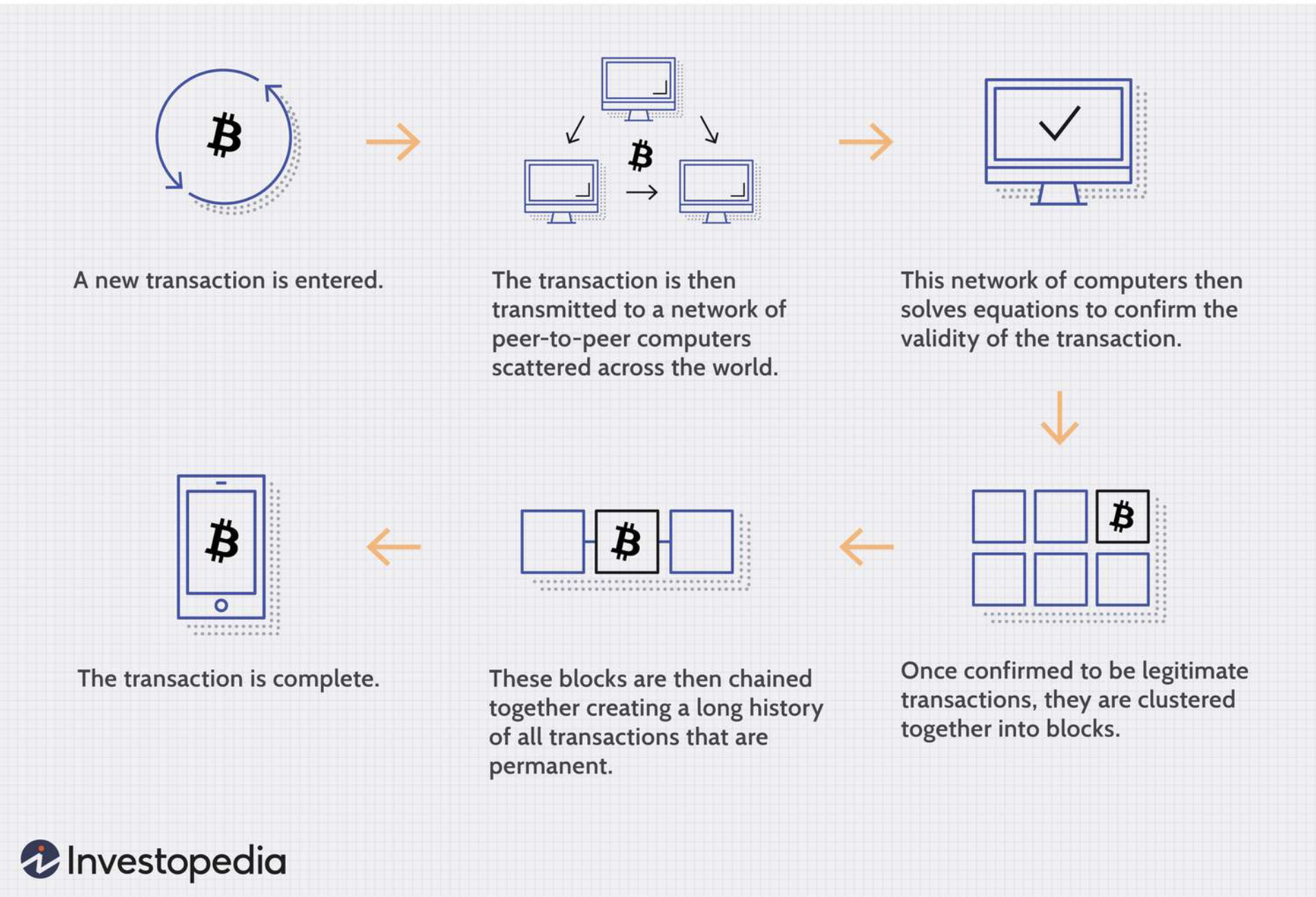
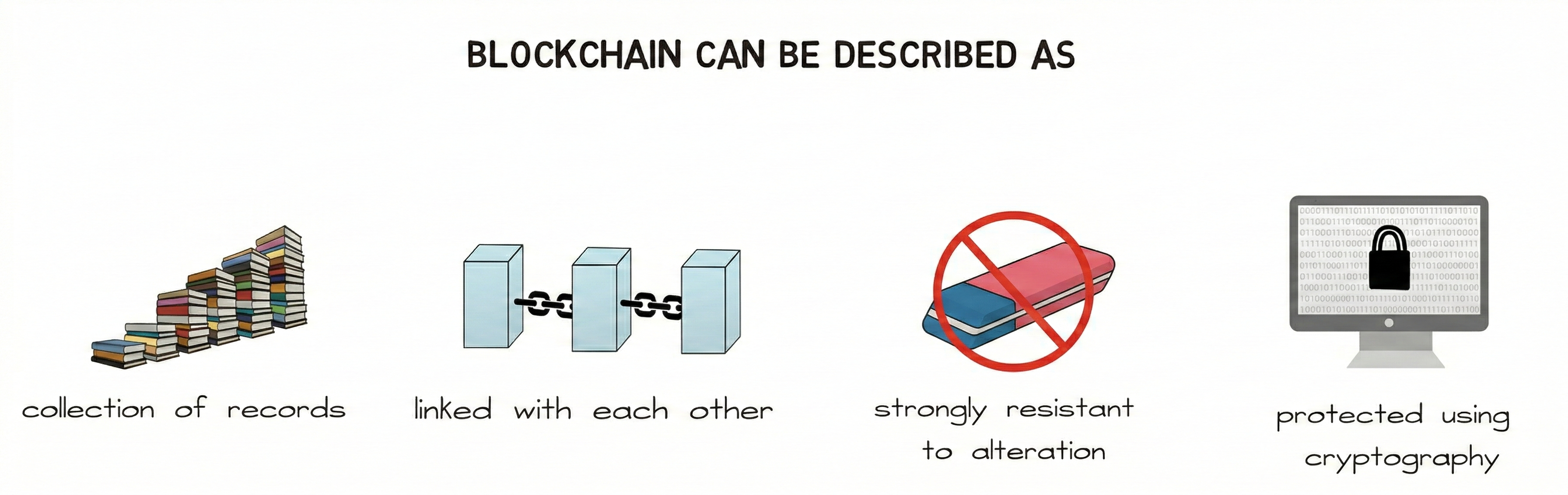
Strip away the jargon and blockchain is essentially a shared record book. Instead of sitting in one bank's vault, thousands of computers around the world hold identical copies of it simultaneously. When someone adds an entry, the whole network checks it, agrees it's legitimate, and locks it in permanently. Nobody owns the record book. Nobody can quietly edit last Tuesday's entries.
Each "block" contains a batch of transactions, a timestamp, and a unique fingerprint linking it to the block before it. Change anything in the chain and every subsequent fingerprint breaks, which means the tampering becomes immediately obvious to the entire network. It's less like a ledger and more like writing in wet concrete: once it sets, it's set.
Where It Actually Matters
In wealthier, stable economies, most people encounter crypto as speculation, something to buy and watch go up or down. But that framing misses where blockchain technology is doing its most significant real-world work.
Take Nigeria. Since 2016, the naira has lost more than three-quarters of its value against the US dollar. Inflation surged past 24% in 2023, and traditional bank transfers for international remittances carry fees of up to 8% per transaction. For context, that's 8% gone before a single naira lands in anyone's account. Against that backdrop, it makes complete sense that 47% of Nigerians between the ages of 18 and 64 have used cryptocurrency - the highest rate in the world by a significant margin, compared to 16% in the United States and 27% in India.
And critically, unlike many developed economies where speculation takes a central role in driving adoption, in Nigeria cryptocurrency adoption is much more multi-faceted. People aren't buying Bitcoin hoping to get rich. They're using it to preserve savings, receive money from abroad, and access exchange rates that the formal banking system won't offer them. 84% of Nigerians hold at least one cryptocurrency wallet. This isn't a trend. It's infrastructure.
Venezuela tells an even starker story. The bolívar has lost 99% of its value since 2018. In Argentina, inflation hit 300% in 2024, and people convert pesos to Bitcoin every payday. In Venezuela, people use Bitcoin and USDT to buy groceries, pay for medicine, and send money abroad. It is not an investment strategy. It's how people eat.
Then there's Ukraine. When the war disrupted normal banking, people turned to Bitcoin and USDT to protect their savings. Humanitarian organisations began using crypto as a gateway to move money into regions where traditional banking had broken down entirely.
The common thread across all of these places is straightforward: as long as you have a smartphone and an internet connection, you have access. No branch. No appointment. No approval from an institution that may have frozen accounts, collapsed, or simply never existed in your region. In Nigeria alone, roughly 36% of adults remain unbanked, with many more relying on cash or informal systems. Crypto doesn't ask for a credit history.
Beyond Sending Money
The practical applications extend well beyond personal finance.
When you buy a coffee labelled "single origin, ethically sourced," blockchain is increasingly the tool companies use to actually verify that claim - tracking a product from farm to shelf in a way that's difficult to fake. Several major food suppliers use it precisely because one contamination outbreak can cost millions, and being able to trace exactly which batch of produce is affected within hours rather than weeks is worth a lot.
Smart contracts are another quiet revolution. These are agreements written directly into code: if condition A is met, payment B is automatically released. No lawyer needed, no chasing invoices. A freelancer and a client in different countries can transact with the same confidence as if they were sitting across a table with a notary.
And in the 2018 West Virginia midterms, overseas military voters were able to cast ballots via a blockchain-based app - a small but striking test of what tamper-evident, transparent voting infrastructure might one day look like at scale.
The Honest Downsides
None of this means blockchain is magic. The technology is energy-intensive, slower than centralised systems for high-volume transactions, and the regulatory picture remains genuinely messy. Different countries treat it completely differently, which creates real headaches for anyone building on top of it.
It has also attracted its share of bad actors. The same privacy features that protect a Ukrainian family preserving their savings also protect fraudsters. That's not unique to blockchain - cash has always been the preferred currency of crime - but it's worth being clear-eyed about.
And as my own experience hints at, the learning curve is real. For people who aren't comfortable with technology, or who simply can't afford to make a mistake with their money, the unfamiliarity of crypto can be a genuine barrier. Ease of use is improving, and apps like Sendcash exist precisely to lower that barrier, but we're not at "anyone can do this without thinking" yet.
What blockchain represents isn't a guaranteed utopia. It's a genuine alternative architecture for how trust can work - one that doesn't require you to take any single institution's word for it.
For people in London or New York, that might sound abstract. For someone in Lagos watching their savings lose value every month, or a family in Caracas trying to buy basic medicine, or a Ukrainian trying to access funds while banking infrastructure crumbles around them, it isn't abstract at all. It's the difference between having options and having none.
The barrier to entry is remarkably low. A smartphone. An internet connection. That's largely it. Which is precisely why, in the places that need it most, blockchain isn't waiting for the rest of the world to catch up.